
What to Look for in a Cast and Crew Transportation Service in New York
Discover how to choose the right cast and crew transportation in New York. Learn about fleet capacity, production logistics, and navigating NYC film locations.
2/10/20265 min read
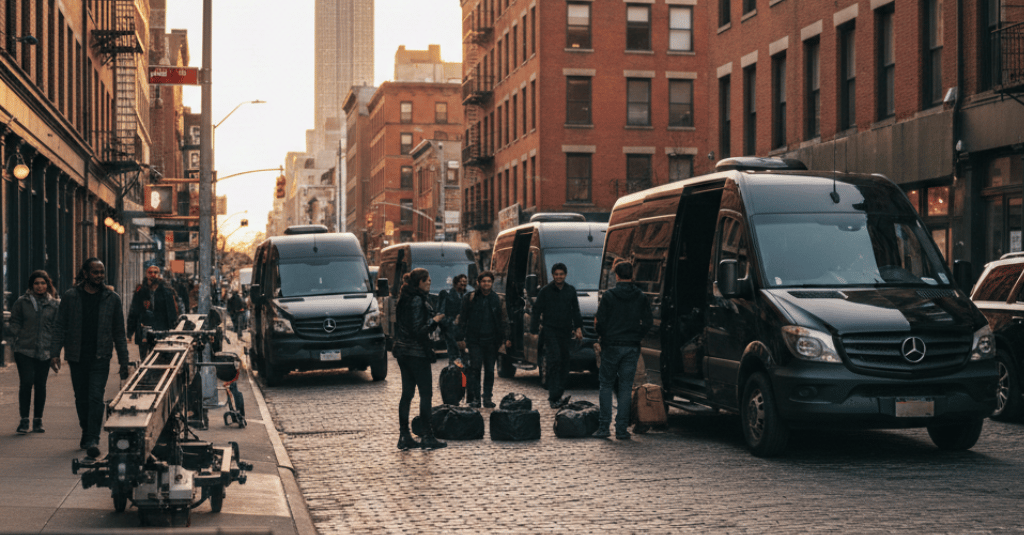

What to Look for in a Cast and Crew Transportation Service in New York
Navigating the logistical labyrinth of New York City is a challenge for any traveler, but for those in the film and television industry, it is a high-stakes operation. In a city where "time is money" isn't just a cliché but a line item on a budget, the movement of talent and technical staff is critical. Choosing the right cast and crew transportation can be the difference between a seamless shoot and a costly production delay.
From the narrow cobblestone streets of DUMBO to the bustling corridors of Midtown, New York film transportation services require a level of precision that standard car services simply cannot match. This guide explores the essential factors production managers must evaluate when securing transportation for film and TV crews in the Empire State.
1. Unwavering Reliability and Punctuality
In the world of production, a "call time" is a sacred contract. If the director of photography or the lead actor is stuck in a tunnel, the entire production stops, yet the payroll clock keeps ticking. When evaluating cast and crew transportation, punctuality is the non-negotiable foundation.
A professional service should demonstrate a track record of "early is on time." In New York, this means more than just looking at a GPS; it requires a deep understanding of the city’s rhythm, from gridlock alert days to sudden bridge closures. Reliability also extends to the vehicle's condition—mechanical failures are not an acceptable excuse for a missed shot.
2. Deep Experience with Film & TV Productions
There is a massive difference between executive car services and film production transportation. A specialized provider understands the unique culture of a film set. They are familiar with the "hurry up and wait" nature of the industry and the need for discreet, professional conduct around high-profile talent.
Expertise in movie production transport involves understanding the hierarchy of a set. Chauffeurs and coordinators should know how to interact with Location Managers and Transport Captains, ensuring that vehicles are staged in a way that doesn't interfere with the frame or the lighting rigs.
3. Fleet Options and Capacity
A one-size-fits-all approach rarely works for production crew logistics. A high-quality provider should offer a diverse fleet to accommodate various needs:
Luxury Sedans/SUVs: Ideal for "talent" who require privacy, comfort, and a space to review scripts between locations.
Production Vans & Sprinters: Essential for crew transportation services, allowing technical teams to travel together efficiently.
Large Shuttles: Necessary for moving background actors or large departments to remote on-location film transportation sites.
The ability to scale the fleet up or down based on the day’s call sheet is a hallmark of a top-tier New York provider.
4. Knowledge of New York Routes and Filming Locations
New York is a city of micro-climates and complex traffic patterns. A driver who relies solely on a standard navigation app is a liability. The best New York film transportation services employ drivers who are "street smart."
They should be familiar with common filming hubs like Steiner Studios or Silvercup, as well as the logistical hurdles of shooting in places like Times Square or the Financial District. Knowing which streets can accommodate a high-top Sprinter van or where a talent car can safely idle during a quick take is invaluable.
5. Safety Standards and Compliance
Safety is often overlooked until something goes wrong. In New York, it is imperative that any cast and crew transportation provider is fully compliant with the New York City Taxi and Limousine Commission (TLC) or Department of Transportation (DOT) regulations.
Insurance: Ensure the provider carries high-limit commercial liability insurance specifically rated for production work.
Driver Vetting: Professionals should undergo rigorous background checks and regular safety training.
Vehicle Maintenance: Routine inspections should be documented to ensure every vehicle in the movie production transport fleet is road-worthy and safe for passengers.
6. Scheduling Flexibility and Last-Minute Changes
Production schedules are written in pencil, not ink. A scene might wrap early, or a weather cover sets in, moving the entire operation from an outdoor park to an indoor studio.
When searching for transportation for film and TV crews, ask about their "as-directed" services. A provider must be reachable 24/7. The ability to pivot—adding a vehicle at 3:00 AM for an emergency gear pickup or extending a driver’s shift because a shoot ran long—is what separates a partner from a mere vendor.
7. Communication and Coordination
Effective production crew logistics rely on a centralized point of contact. Production coordinators don’t have time to call ten different drivers. A high-quality service provides a dedicated dispatcher or a digital platform that offers real-time tracking of all vehicles.
Knowing exactly where the "talent" is located via GPS tracking allows the AD (Assistant Director) to time the set-up perfectly. Clear, concise communication via text or radio ensures everyone stays in the loop as the day progresses.
8. Budget Considerations and Transparency
While quality comes at a price, film production transportation costs must be manageable within the line-item budget. Look for a service that offers transparent pricing structures. This includes:
Flat Rates vs. Hourly: Understanding when a flat transfer is better than an hourly "as-directed" booking.
Hidden Fees: Clarifying expectations around fuel surcharges, tolls (which are significant in NYC), and gratuity.
Wrap-Up Billing: Producers need organized, itemized invoices that match the production’s accounting requirements for tax credit purposes.
Frequently Asked Questions (FAQ)
What is the difference between a standard car service and a film crew service?
Standard car services focus on A-to-B travel for the general public. A dedicated cast and crew transportation service understands production terminology, call times, and the specific logistical needs of on-location film transportation, such as equipment space and talent privacy.
How do transportation services handle NYC’s "Gridlock Alert" days?
Experienced New York film transportation services monitor city traffic advisories and department of buildings' permits. They often suggest earlier pick-up times or alternative routes to ensure the production remains on schedule despite city-wide delays.
Can transport services accommodate large amounts of gear?
Yes, many crew transportation services offer "split" options where Sprinter vans or specialized SUVs are used to carry both personnel and essential kit bags or "ditty" bags that need to stay with the crew.
Is it possible to book 24/7 service for overnight shoots?
Absolutely. Most transportation for film and TV crews operates on a 24-hour cycle to accommodate late-night wraps and early-morning call times common in the industry.
Why is local New York experience so important for production transport?
New York’s unique parking regulations, film permit zones, and constant construction make it a high-difficulty environment. A driver with local movie production transport experience knows where they are legally allowed to stand and how to navigate the city’s complex bridge and tunnel system during peak hours.
Conclusion
Selecting the right cast and crew transportation is a strategic decision that impacts the morale and efficiency of a production. By focusing on reliability, a diverse fleet, and deep local expertise, production managers can mitigate the risks associated with New York’s chaotic infrastructure.
Ultimately, the best film production transportation is the one you don’t have to think about once the cameras start rolling. It should function as a silent, seamless extension of the production itself, ensuring that the only drama on set is the one happening in front of the lens. Finding a partner that understands the nuance of production crew logistics is an investment in the success of the project, allowing the creative team to focus on what they do best: telling stories.